
 On Sunday evening, I was finally able to put down my Kindle, having completed Cutting for Stone by Abraham Verghese. It was a beautiful read, though I think the editor could have been a bit more heavy-handed. Set in Addis Ababa, the arc follows two boys–orphaned twins–who are growing up under the parentage of two physicians in a local hospital. Verghese writes about Ethiopia with a loving hand, and it was fitting that the night after finishing the book, I had a few friends join me for an Ethiopian dinner in the U Street neighborhood of DC.
DC is literally awash with Ethiopian cuisine, and you’ll find loyal followers of almost any of the local Ethiopian restaurants. Our choice for the evening was Etete, an intimate spot slightly sequestered from the vibrant U Street scene. Along with Ethiopic on H Street (another fantastic spot, and one I frequented often when I lived closeby), Etete is held in high regard amongst local food critics. The Washingtonian has consistently rated it highly over the past few years, and even on a Monday night, it was a lively and bustling place to eat.
 Although I have eaten Ethiopian food on a number of previous occasions, I wanted to make sure that I voiced my food allergy concerns before ordering, both for my benefit and for that of one of my dining companions who happened to have a tree nut allergy to complement my peanut allergy. I’ll say now that if you have a nut allergy, and haven’t yet tried Ethiopian food, you must go at once! There are no nuts on the menu, period. As for corn, not a chance. Soy? All set.
That said, I would like to offer a word of caution for those with serious food allergies. When we tried communicating the allergies to our server, it took about five minutes of pointing, exaggerated enunciation and repetition to make sure it had sunk in. The language barrier, particularly for our server, was quite strong, and it was difficult to ensure that she understood the severity of the issue. It was only because there were no nuts listed on the menu, and the fact that I had eaten there safely in the past that we felt comfortable in ordering.
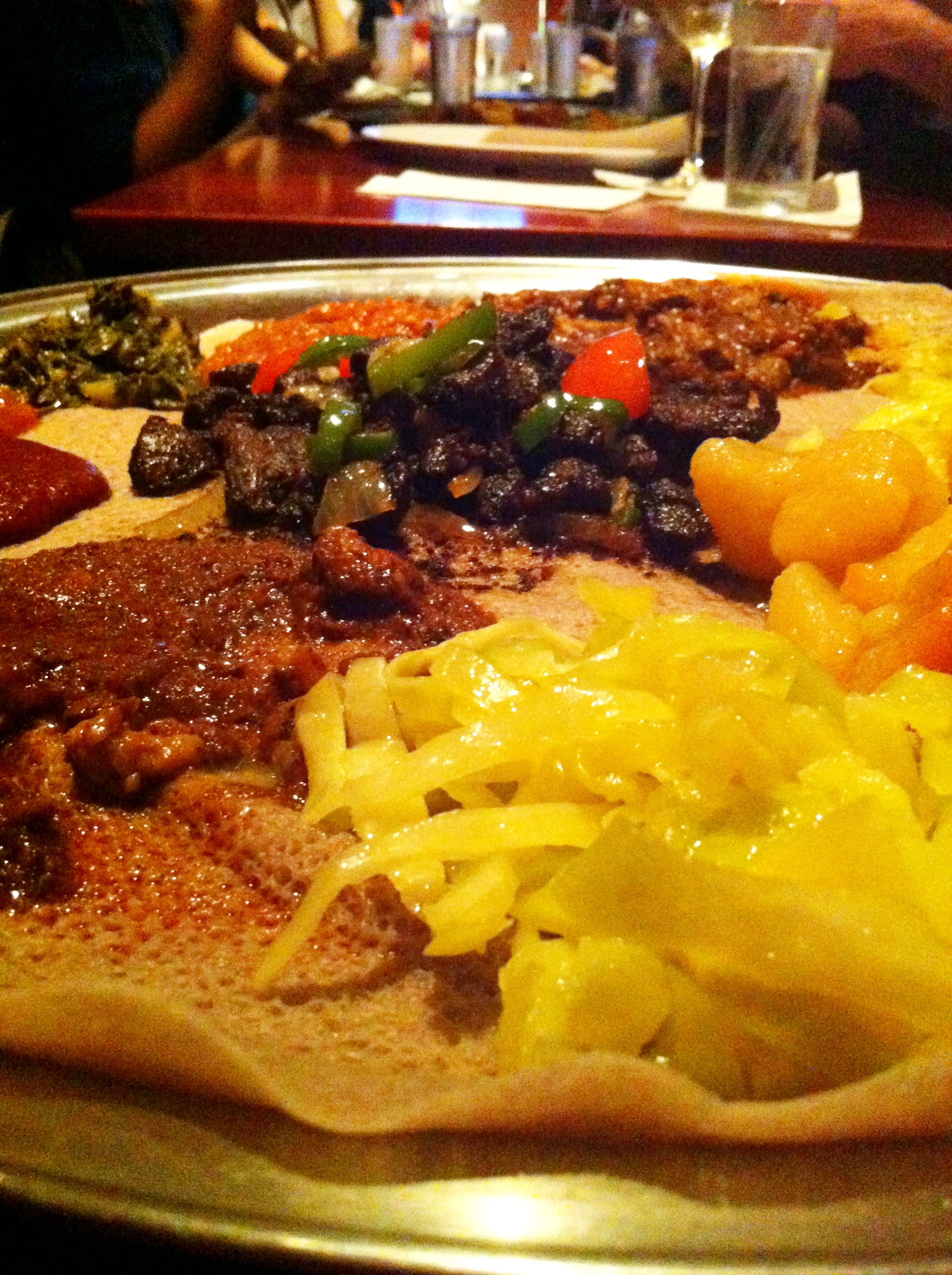
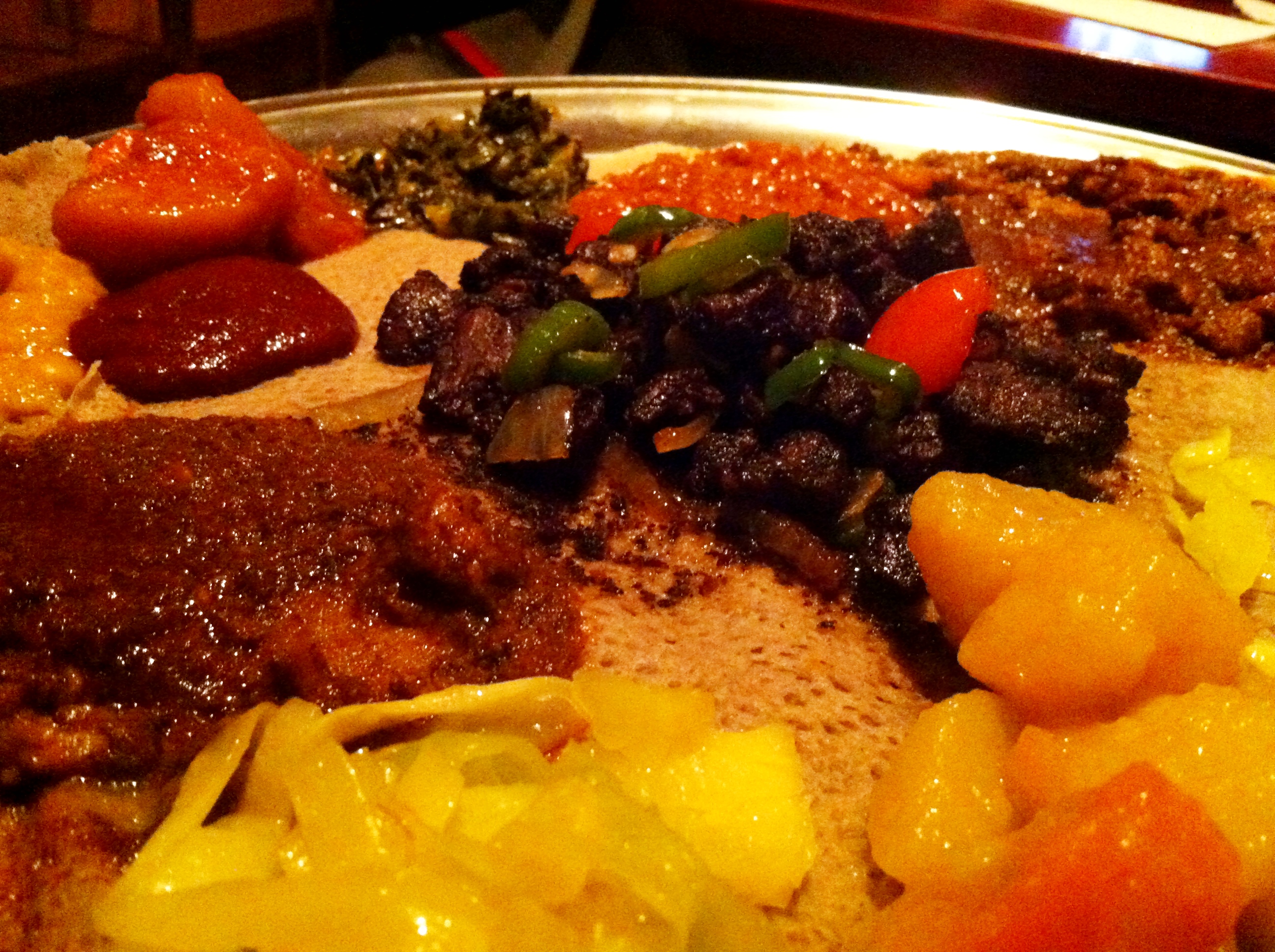
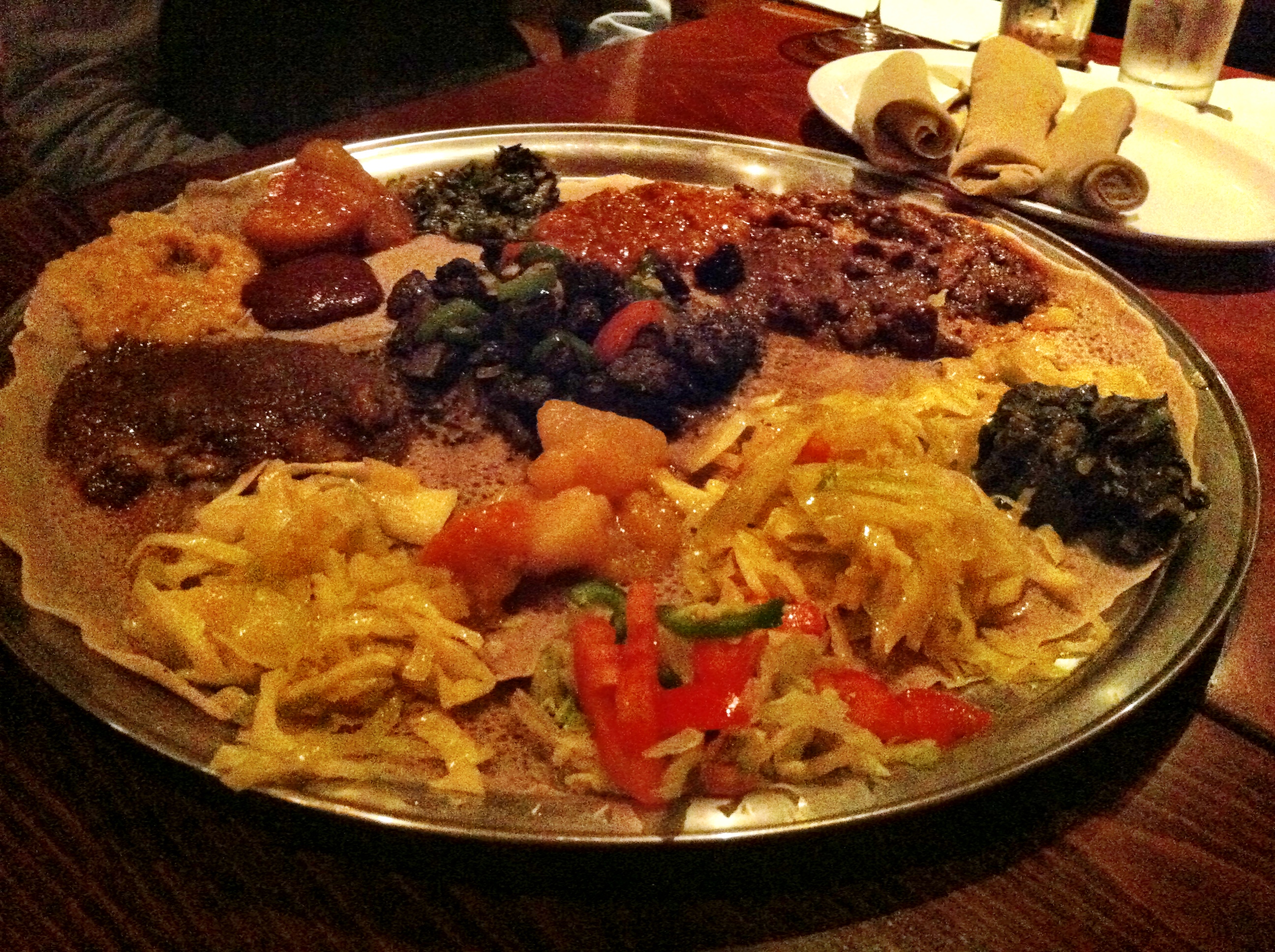 It’s always a bit of a guessing game for Ethiopian portions, especially when you’re with a group. Our group of four ended up ordering a vegetarian platter and added Yebeg Wat (a lamb dish with crushed red pepper and special butter sauce), Derek Tibs (beef sautéed until crisp in onion, chili, tomato) and Tekil Gomen (fresh cabbage and carrot cooked in oil with onion, fresh garlic, jalapeno). Each pile of food had a unique, tangy and spicy flavor which bled into the injera “plate.” For the uninitiated among you, you might be surprised to hear that Ethiopian food is never eaten with utensils; instead, everything is scooped up by hand with the injera, a spongy pancake-type bread that is served with every dish. I was a bit miffed to find that Etete’s injera is served cool or at room temperature; I prefer mine to be served warm.
I discovered tonight, as I had hoped, that the grain injera is made from, tef, is actually gluten-free! Apart from language barrier issues, Ethiopian food can be a fantastic option for people with restricted diets. Vegetarians would rejoice here, as about 1/3 of the extensive menu is all vegetarian. Gluten-free or people with celiac could enjoy the injera without worry, and there are very few dairy products to be found, so casein allergies or lactose intolerance would also be easy to handle!
 While I love the food at Ethiopic, I do not love the service. Walking in, I found the two head waitresses squatting on the staircase engaged in intense conversation. It took a moment for them to acknowledge me, and it was with great annoyance that they paused their gab to seat me and bring me a glass of tea. The food definitely makes up for the less-than-ideal customer service though, and I would gladly go back anytime. Be careful of Etete’s signature honey wine though. Unless you truly enjoy apple cider vinegar, this might not be the right drink for you. (Un)fortunately, the arrival of our last dining companion and subsequent swaying of the table meant that the honey wine, in all its cloudy yellow glory, was sacrificed to the floor.
Etete | 1942 9th St NW (between N T St & N Florida Ave) Washington, DC 20001 (202) 232-7600


 persnickety